Online store design in Miami with a focus on conversion, not decoration. In online store design we work on the product page, the checkout and speed with a sales mindset; in ecommerce development we integrate payment gateways, inventory and analytics. Every visit gets measured.
Let’s talk about your store: we tell you what’s holding it back before we quote you.
Online Store Design in Miami
Ecommerce Development
We analyze your brand's current stage and business model
We design with neuromarketing and UX/UI principles, not templates
We build fast, secure websites ready to convert
We set up PayU and PayPal payment gateways
We build online stores with a scalable catalog architecture
We design custom websites
We position your online store on Google with technical rigor
We configure your domain and hosting sized to your catalog
Online Store Development
E-commerce Development Experts
As an e-commerce development agency, we are partners to Marketing Managers, Marketing Directors, and Business Owners. We build attractive online stores without sacrificing functionality: from the dashboard you can see your store’s stats and set up product listings, shipping costs, and every process an online store requires. We also optimize your website so it ranks at the top of Google (SEO), with a team that backs up every technical decision. Online stores that actually sell!
Online Store Design
Ecommerce That Actually Works!
+20
Years of Experience
+123
Professionals at Your Service
+733
Satisfied Clients
+113
Mentoring, Consulting & Courses
+13
Countries with Success Stories
Design of Ecommerce Miami
At AMD, an online store design agency, we build ecommerce with a conversion-first mindset and technical rigor
Conversion before aesthetics. Online store design is the tool that defines whether a business sells in an increasingly digital market. A professional online store improves the user experience, boosts your sales, gives your brand direction and positions you ahead of your competition.
An attractive, functional and optimized website improves the customer experience, sustains conversion and strengthens your brand in an increasingly competitive market. Discover how professional ecommerce design drives your business.
Ecommerce Development Agency in Miami
Increase your product sales with a clear, measurable process
1. Design Your Online Store
Take your business to the digital world with Experts in Online Store Design.
2. Manage Your Ecommerce
Just focus on organizing your Ecommerce products and setting prices and shipping rates.
3. Sell Your Products
Finally, monitor orders and ensure products reach their destination with online store designs.
Explore our portfolio of Online Stores
Our Best Work in
Online Store Design
We Work with All Payment Gateways
Online Stores with All Available Payment Methods
Development of Online Stores
5 Steps to Develop Your Ecommerce
1. We Conduct a Market Study
Assessment before choosing a platform. To have a profitable Ecommerce, we start with a market study that defines, together with you, the target audience and the market niche the business competes in. With that information we determine which sociological, geographic, and psychographic characteristics matter when designing the Ecommerce on an online store platform such as Vitex, Opencart, Shopify, Magento, and Woocommerce.
2. Strategy Creation
Strategy architecture based on data, not assumptions. With the target’s characteristics defined, we establish a digital marketing strategy that drives the brand, planning and executing objectives focused on content that highlights the company’s identity. That way the business sets itself apart from the competition and gains Ecommerce positioning.
3. Content Generation
Relevance in every post. Valuable content is what sustains your customers’ interest, and to achieve it we work with four types of posts: informational, institutional, indirect sales, and value-added.
4. We Build Smart Ad Campaigns
Precision in segmentation. With the market study in hand, we build smart ad campaigns that define which potential customers are worth reaching.
The tools process audience volume; the team decides which ones are worth paying for based on what each sale leaves in an Ecommerce.
5. Evaluation
Evidence of the period in a clear report. At AMD we produce monthly reports so the company knows which goals were reached with the positioning and awareness strategies for the online store. That review defines what steps come next to improve results.
Some of Our Partners in Online Store Design
Online Store Design Agency in Partnership with the Best Digital Companies
Let's Schedule a Meeting Soon!
Consultative Advisory
How Can We Help You?
Contact Us!
Leave Us Your Details
At Online Store Design Agency We Build Strong Relationships with Our Clients
They trusted us
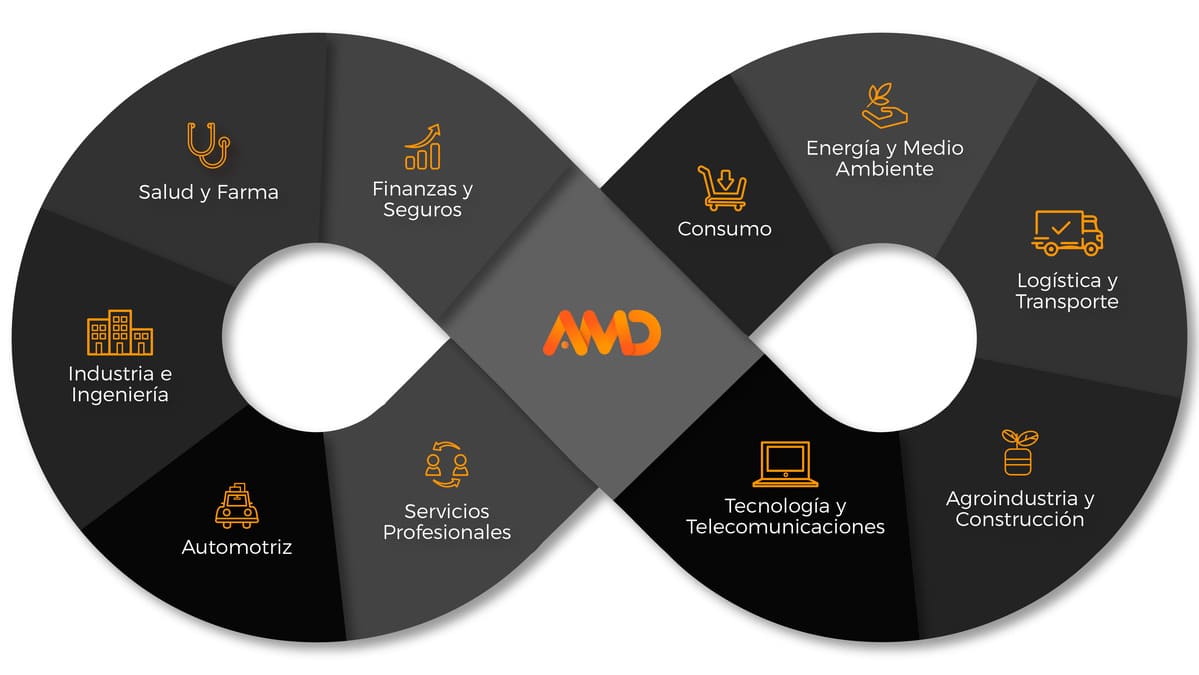
Online Store Design with Experience Across Industries
We work with dedication to be the strategic allies of businesses
Ecommerce Design
Frequently Asked Questions
What Is Ecommerce?
An ecommerce store sells online: catalog, cart, payment gateway, and shipping, operating without business hours.
Unlike an informational page, every element here has a commercial job. The product page answers questions before the customer writes in, the internal search takes them to what they came to buy, and checkout must finish in as few steps as possible.
What determines whether it sells is not the template, but the criteria used to organize the information: what visitors see first, what friction gets removed, and what gets measured.
In online store design, we work on that logic. We define the catalog architecture, the purchase path, and analytics before touching visual design, so the store can improve with evidence and not with intuition.
What Type of Products Can You Sell?
You can sell almost any product that can be shipped, picked up at a physical location, or downloaded.
Physical Products with Shipping: clothing, footwear, packaged food, spare parts, industrial supplies, or cosmetics.
Physical Products with Store Pickup: useful when the product is bulky, fragile, or requires guidance at delivery.
Digital Products: courses, licenses, templates, and downloadable content, delivered automatically once payment is confirmed.
Services: vouchers, plans, and bookings that the customer pays for online and are then delivered.
What changes from one to another is not the platform, but the product page and the shipping rules. A spare part needs compatibility and measurements, a food product needs storage conditions, and a course needs immediate access.
There are categories with legal or payment gateway restrictions, such as medications, liquor, or controlled products. We review them with you before setting up the catalog so there are no surprises in operations.
How Many Products Can You Have in an Ecommerce Store?
There is no practical technical limit: a well-built online store can handle anywhere from 10 SKUs to tens of thousands.
What does have a limit is the capacity to maintain them. Each SKU needs photos, description, price, inventory, and category, and all of that goes stale if no one manages it.
That is why we start with the catalog that actually sells. We set up the main categories and the products that drive sales first, leave the structure ready, and then upload the rest in batches.
When the catalog is large, what matters is the architecture: categories, filters, attributes, and internal search. If that is poorly defined, the customer cannot find the product even if it exists. If it is well defined, the catalog scales without rebuilding the store.
Hosting is sized for that volume and documented, so you know the criteria for expanding it when you grow.
How Can You Build an Online Store?
It is done in an order you should not change: business first, design second, and product upload last.
1. Definition. What you sell, to whom, and at what margin. From there come the catalog, shipping, and payment method decisions.
2. Architecture. Categories, attributes, filters, and purchase path. This is the step that weighs most on results and the one most often skipped by those starting from a template.
3. Design. The screens that decide the sale: homepage, category, product page, cart, and checkout.
4. Development. Integration of payment gateways and carriers, inventory setup, and shipping rules.
5. Upload and Testing. Catalog, text, images, and real end-to-end purchases.
6. Launch. Publishing with analytics installed, training for your team, and delivery of access, documentation, and a video tutorial.
What Elements Should an Online Store Have?
An online store needs seven pieces to sell, and all of them are reviewed before you publish.
Complete Product Listing: real photos, a description that answers questions, price, availability, and delivery time.
Search and Filters that respond to your customer’s vocabulary, not your company’s internal vocabulary.
Short Cart and Checkout, with shipping cost visible before the last step.
Local Payment Methods: cards, PSE, bank transfer, and cash on delivery when the business allows it.
Shipping Rules by city and weight, connected to the carrier.
Verifiable Trust: SSL certificate, data policy, exchange policy, and real contact details.
Measurement: analytics and pixels configured from day one, because without data there is no way to optimize later.
On that foundation, you work on load speed and the mobile version, where most purchases happen.
How Will an Online Store Increase My Sales?
An online store increases sales in three ways, and each should be measured separately.
Reach: you stop selling only to those who walk into your physical location and start serving other cities without opening a branch.
Hours: the store receives orders at night, on holidays, and outside business hours.
Conversion: when the product page answers questions, checkout is short, and shipping is clear, the same amount of traffic results in more orders.
What an online store does not do is bring traffic on its own. It needs SEO, ads, or a customer base, and that is why we connect ecommerce with SEO and campaigns from setup.
Everything is measured: visits, orders, average order value, and cart abandonment. With those four numbers, you know where the leak is and what to fix first.
What Business Model Is an Online Store?
An online store can run on several models, and choosing the right one defines your catalog and your logistics.
B2C: you sell to the end consumer, with public prices and single-unit shipping.
B2B: you sell to other businesses, with per-client price lists, volume orders and sometimes credit.
D2C: the brand sells direct, with no distributor in between, and keeps the margin and the customer data.
Subscription: the customer pays on a recurring basis and receives a product or service on a regular schedule.
Marketplace: several sellers list on the same platform and you manage the rules.
Many businesses run a hybrid model, with a physical store and a digital channel that share inventory. That decision is made before design, because it changes the product page, the checkout and the integration with your system.
How Do Online Stores Work?
An online store works like a chain: if one link fails, the sale falls apart even if the rest is fine.
The customer arrives from a search engine, social media or ads and lands on a category or a product page.
They choose, add to cart and move to checkout, where they see the shipping cost and delivery time before paying.
They pay through the gateway, which validates the transaction and sends the confirmation back to the store.
The store deducts inventory, generates the order and notifies your team and the customer.
It ships, it’s delivered, and the tracking number is recorded for follow-up.
Every step leaves data, and that traceability is what lets you see where people drop off and fix it with evidence. Without that record, any improvement is a gamble.
What Is an Ecommerce Model?
An ecommerce model is the operational structure that supports the sale: how the catalog is organized, how you charge, how you ship and how you handle support afterward.
It is not the same as the platform. The platform is the tool; the model is the business decision that the tool executes.
In the catalog it defines whether you sell by SKU, by variant or by bundle, and what attributes each product needs.
In payment it defines which payment methods you accept, whether you offer credit and how you handle returns.
In delivery it defines who ships, with what timeframes and what happens when something gets lost.
In after-sales it defines who responds and how quickly.
Defining this before you design keeps you from rebuilding the store three months later. It is the least glamorous part of the project and the one that saves the most money.
How Much Does It Cost to Create an Online Store?
Cost depends on four variables, and any figure given without knowing them is a number in the air.
Catalog size: setting up 30 SKUs does not cost the same as 3,000 with variants and attributes.
Integrations: payment gateways, carriers, e-invoicing and ERP add development and testing.
Degree of customization: starting from a standard theme costs less than a custom design with custom development.
Content: if photography and descriptions have to be produced, they go into the budget; if you deliver them, it goes down.
On top of that are the recurring costs you should be clear about from the start: domain, hosting, security certificate, gateway fees and maintenance.
At AMD we quote after the diagnosis, not before. We review your catalog and your operation, tell you what you need and what you don’t, and deliver the scope in writing with delivery timeframes.
What Does an Ecommerce Developer Do?
An ecommerce developer builds and maintains the technical side of the store so sales don’t fall apart.
They set up the platform and configure it for your catalog: categories, attributes, variants and pricing rules.
They integrate payment gateways and carriers, and test the full flow with real transactions before launch.
They connect the store to your inventory, your invoicing or your ERP when it exists, so nobody has to enter data twice.
They optimize speed, mobile version and technical SEO, which is what decides whether Google shows your product pages.
They leave analytics installed with purchase events and document how everything was set up.
After launch, they handle maintenance: updates, backups, security and bug fixes.
At AMD that work doesn’t stand alone. It comes with business judgment, so every technical decision answers to how you sell.
Where Can I Hire an Agency to Optimize My Online Store?
AMD Digital Agency optimizes online stores in Miami with comprehensive ecommerce strategies. We improve user experience (UX/UI), load speed, the checkout process, product SEO and conversion (CRO). We work with Shopify, WooCommerce, Magento and custom platforms to sustain your online sales and reduce cart abandonment. Our optimization service includes technical site analysis, implementation of local payment gateways, integration with marketplaces (Mercado Libre, Amazon), inventory automation and remarketing campaigns to recover lost sales. We optimize product pages with strategic keywords, professional images and persuasive descriptions that turn visitors into buyers. AMD Digital Agency combines technical development, conversion-oriented design and digital marketing strategies for ecommerce. From optimizing your current store to migrating to more robust platforms, we’re with you at every stage of your online business growth.
At AMD we do it as a marketing agency: the store is designed with how you’ll attract traffic and sales in mind too.
Blog and News About Online Store Design
Online Store Development and Design, E-commerce, Online Stores and more...