
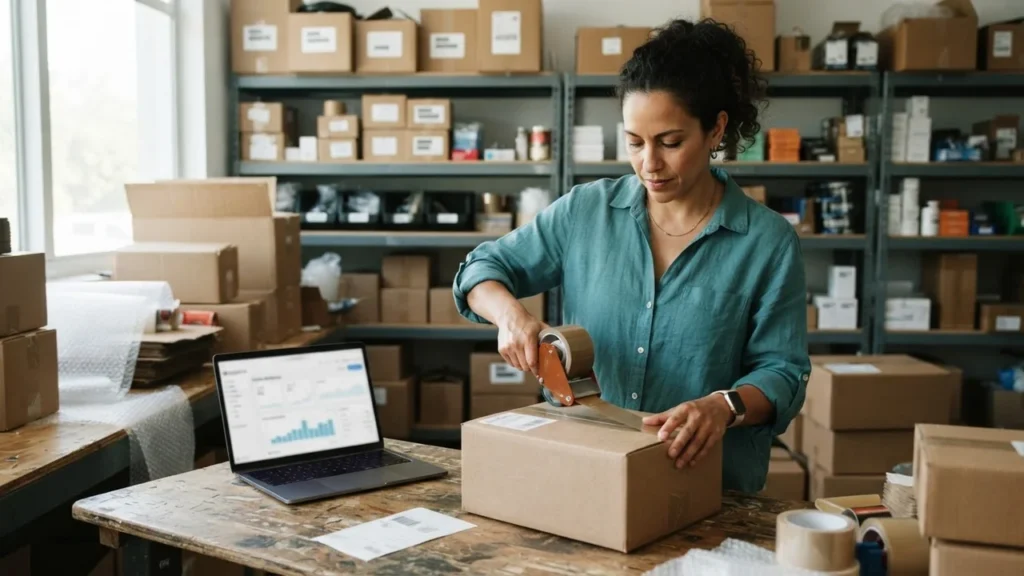
Selling on Amazon is the practice of listing and selling products through Amazon’s marketplace, where Amazon supplies the storefront, the buyer traffic, and much of the logistics. For a business in Miami, it means reaching customers across the country without opening another physical location.
The setup is more accessible than most owners expect. The competition is heavier than most owners expect too. What separates the two outcomes is preparation: the right account type, a product with real demand, and listings that convert.
If you are exploring selling on Amazon for the first time, the decisions you make in the first weeks shape everything that follows.
What does selling on Amazon from Miami actually involve?
Selling on Amazon from Miami involves three moving parts: an Amazon Seller Central account, a product you can source and ship reliably, and a fulfillment method that fits your margins.
The account is the easy part. Amazon verifies your identity, your tax details, and your bank information before you can list. Most delays come from documents that do not match the name on the account.
The product is where the real work sits. A category with steady demand and moderate competition gives you room to learn. A crowded category with established brands demands a budget you may not want to spend while learning.
Fulfillment decides your cash flow, because storage, shipping, and returns behave differently depending on who holds the inventory.
Why Miami is a practical base for Amazon sellers
Miami gives sellers two advantages that are hard to replicate elsewhere: a bilingual workforce and a freight network connected to Latin America and the Caribbean.
Bilingual teams matter because Amazon buyers search in English, while sourcing conversations, supplier negotiations, and customer service often happen in Spanish. A Miami operation handles both.
The logistics side is just as useful. Freight forwarders, customs brokers, and warehousing space are part of the local business landscape, which shortens the distance between a supplier abroad and a fulfillment center.
Miami’s economy also leans toward tourism, real estate, hospitality, healthcare, and trade with Latin America. Sellers in those sectors find product ideas inside their own daily operations.
How to get started with selling on Amazon, step by step
The sequence below keeps you from spending money before you have answers.
Define your seller model. An individual account suits low volume and testing. A professional account suits sellers who list regularly and want advertising tools. Amazon publishes current requirements and fees on its official seller site.
Open and verify your Amazon Seller Central account. Complete the tax interview, connect a bank account, and confirm your identity. Do this before you order inventory, because verification takes time.
Validate demand before you buy. Check how many sellers already offer the product, how reviews are distributed, and whether prices hold steady. A category with a few strong sellers and no dominant brand is often the better entry point.
Source and inspect. Order samples. Check packaging, instructions, and whether the product survives shipping. Returns eat margin faster than most new sellers expect.
Build the listing. Images, title, bullets, and backend keywords carry the conversion. This is where most of your early optimization effort belongs.
Choose fulfillment and launch. Decide between Fulfillment by Amazon, merchant fulfillment, or a mix. Then track sessions, conversion rate, and return reasons weekly.
| Fulfillment approach | Who stores and ships | Best suited for | What to watch |
|---|---|---|---|
| Fulfillment by Amazon (FBA) | Amazon | Sellers who want Prime eligibility and hands-off shipping | Storage fees, long-term inventory, and returns handling |
| Fulfillment by merchant (FBM) | You or a third-party warehouse | Bulky items, custom products, and low-volume tests | Shipping speed promises and handling time accuracy |
| Hybrid | Both, split by product | Sellers testing new items while proven ones stay in FBA | Inventory tracking across two systems |
What is Amazon FBA and when does it make sense?
Amazon FBA is a fulfillment program where you send inventory to Amazon and Amazon stores, picks, packs, and ships each order. It also handles customer service and makes your products eligible for Prime shipping.
It makes sense when your product is compact, sells steadily, and benefits from fast delivery. It makes less sense when your item is oversized, seasonal, or slow-moving, because storage costs keep running while sales do not.
The trade-off is control. You give up part of your margin and some visibility into packing in exchange for speed and reach. Amazon FBA is one of the two main ways to handle fulfillment when selling on Amazon.
For the full breakdown, this guide explains how Amazon FBA works for Miami sellers.
Setting up Amazon Seller Central correctly
Amazon Seller Central is the dashboard where you manage listings, inventory, orders, advertising, and performance metrics. Treat it as an operating system you check daily.
Two settings deserve attention early. Your shipping template defines the delivery windows buyers see. Your return policy matters because mismatched expectations turn into negative reviews.
Connect your brand early if you own a trademark. Brand Registry unlocks A+ content, Sponsored Brands, and protection against hijacked listings. Those tools change how your products appear next to competitors.
How much does it cost to start selling on Amazon?
There is no single startup number, because cost depends on your category, your product size, and how you fulfill orders. Model the unit economics before you commit to inventory.
Build the model with these lines: cost of goods, inbound freight, referral fee for your category, fulfillment or shipping cost per unit, storage, advertising spend per sale, and expected returns. Amazon publishes current fee schedules, so use those figures.
The number that matters is contribution margin per unit after every fee. If it is thin, volume will not rescue it.
Where new sellers lose momentum
Most early problems trace back to three habits. Buying inventory before validating demand is the first. Treating the listing as finished after publishing is the second. The third is ignoring returns data, which tells you whether the problem is the product, the packaging, or the description.
Selling on Amazon is still retail, and retail rewards patience with inventory.
Building a brand buyers recognize
Selling on Amazon puts your product beside established alternatives, so the listing has to look like a brand rather than a reseller. Consistent images, a clear name, and a storefront that holds together raise trust.
Supporting services help here. A well-structured online store design gives your brand a home outside Amazon, and professional product photography gives you images that hold up against competitors.
AMD, a digital marketing agency in Miami, works with businesses that sell on marketplaces and on their own sites. For a deeper look at listing optimization, this article covers optimizing Amazon product listings.
Frequently Asked Questions
How long does it take to start selling on Amazon from Miami?
Account verification usually takes a few days once your documents match the name on the account. Sourcing, sampling, and shipping inventory take longer, often several weeks. Plan around the product timeline rather than the account timeline when you set a launch date.
Do I need a US company to sell on Amazon?
Amazon accepts sellers registered in many countries, and the requirements depend on your entity, your tax situation, and where your inventory ships from. Confirm your case with a tax professional before you register, because the answer changes with your structure.
What is the difference between Amazon FBA and FBM?
Amazon FBA means Amazon stores and ships your inventory. FBM means you or a warehouse you hire handles storage and shipping. FBA buys speed and Prime eligibility. FBM gives you control and lower storage exposure on slow-moving items.
How do I get my first sales after launching a product?
Start with a small, focused advertising budget and a listing that answers buyer questions in the first three bullets. Reviews follow sales, so the first goal is conversion rather than ranking. Adjust price and images based on early data.
Can I sell on Amazon while running a physical store in Miami?
Yes, and the two channels support each other. Your store gives you product knowledge and local customers, while Amazon gives you reach beyond South Florida. Keep inventory accounting separate so you can see which channel earns its keep.
Your next step toward selling on Amazon from Miami
Selling on Amazon from Miami rewards sellers who prepare before they spend. Validate the product, understand the fees, set up Amazon Seller Central properly, and choose a fulfillment method that protects your margin.
The platform will not do the positioning work for you. Listings, images, and brand assets turn traffic into orders, and those are the parts you control.
If you want a team that handles that side of the operation, explore how AMD supports selling on Amazon for businesses in South Florida.